


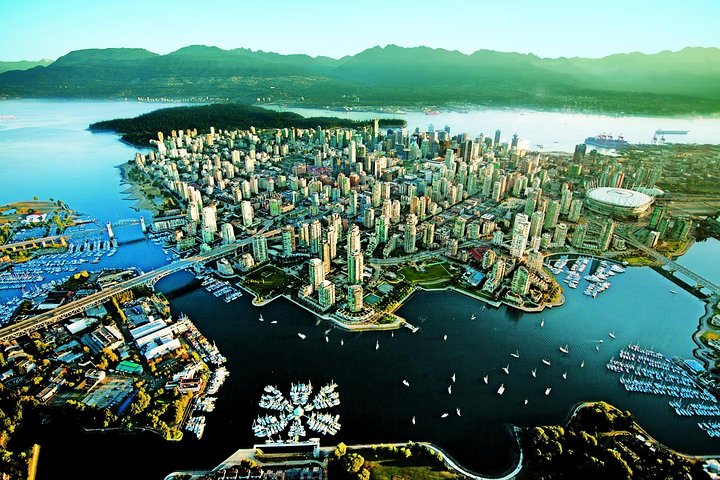


Vancouver’s Green Heart
Stanley Park is a 405-hectare urban park on a peninsula jutting into Vancouver’s harbour — one of the largest urban parks in North America and the city’s defining green space. The park is encircled by the Seawall (a 9-kilometre waterfront path used by walkers, runners, and cyclists), and the interior contains old-growth temperate rainforest (western red cedar, Douglas fir, Sitka spruce — some trees over 500 years old), totem poles at Brockton Point (carved by First Nations artists from the Squamish, Musqueam, and Tsleil-Waututh nations), beaches (Second Beach, Third Beach, English Bay Beach at the park’s edge), the Vancouver Aquarium, rose gardens, and the views across the harbour to the North Shore mountains.
A Stanley Park tour covers the Seawall (by bike, on foot, or by horse-drawn carriage), the totem poles (with the guide’s narration on the First Nations cultural significance), the old-growth forest trails, and the viewpoints — the Lions Gate Bridge framing the harbour, the downtown skyline rising behind the park, and the North Shore mountains beyond.
Frequently Asked Questions
How long does it take to cycle the Stanley Park Seawall?
Approximately 1–1.5 hours for the 9-kilometre loop at a leisurely pace with stops. Bike rental is available at the park entrance on Denman Street.
Is Stanley Park free?
The park itself is free to enter. The Vancouver Aquarium, the horse-drawn carriage tours, and bike rental have separate fees.
What are the Stanley Park totem poles?
Nine totem poles at Brockton Point, carved by First Nations artists. The poles represent different tribal traditions and narratives. A guided tour explains the cultural significance — the poles are not decorative; they tell stories.
How big is Stanley Park?
Approximately 405 hectares (1,001 acres) — larger than Central Park in New York.